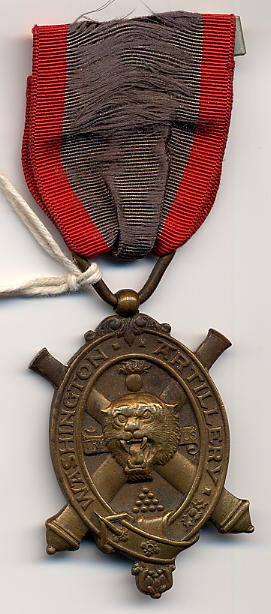
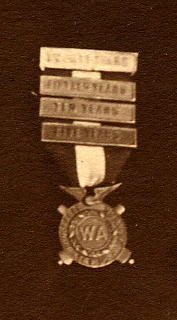
Washington Artillery
Badges,
Insignia, & Medals
over the ages...
As the Native American Artillery
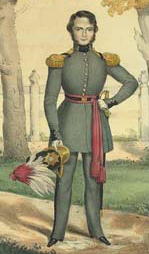
Officer, Native American Artillery circa
1830s
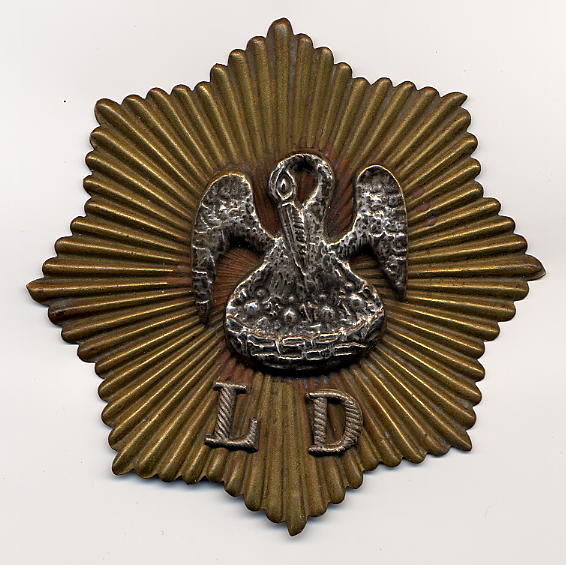
Native American Artillery Shako Plate
A shako is a tall, cylindrical military cap,
usually adorned with an ornamental designation plate on the front and a feather
plume or pompon on the top. The word shako is derived from the Hungarian word
meaning "peaked cap" and saw use in the early 1800s and was used
throughout the 19th century.


Louisiana shako insignia
("L D" possibly standing for either Louisiana
Dragoons or Division)
similar to or possibly exactly what Washington Artillery wore-
circa 1830s
As the Washington Artillery of New Orleans
Washington Artillery Shako Plate
1850s


Washington Artillery with US Model 1851 Shakos
The Washington Artillery
used standard US Model 1851 artillery shakos as depicted in this era lithograph.
Adopted in 1851 as part of the new uniform regulations
for the US army, the shako was to be worn by dragoons, infantry, artillery,
engineers, and other branches, with designating branch of service colors on a
band (or welt) at the base of the shako and on the pompom worn on top. The
enlisted artillery pattern consisted of a red wool pompom ball from whose base a
doubled wire extended to be put through a hole in the top front of the cap, and
a single wire with a brass insignia
depicting a patriotic eagle with 1/4 stylized sunrays background
(commonly called a Hardee eagle). The
body was made of black felt wool.
Immediately below the eagle is the company designation and a suspended
gold/brass crossed cannon over a red band/ (welt) trim. It is possible that the
letters "WA" were attached somewhere on the body of the shako, possibly where
the company designation would normally be placed.
Washington Artillery Shoulder Plate

Washington Artillery (circa 1850s) showing
shoulder slings
upon which WA tiger plates would have
be attached.


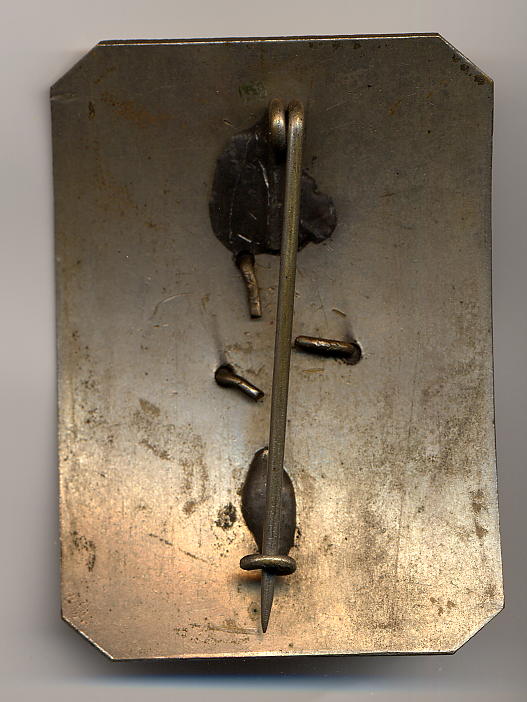
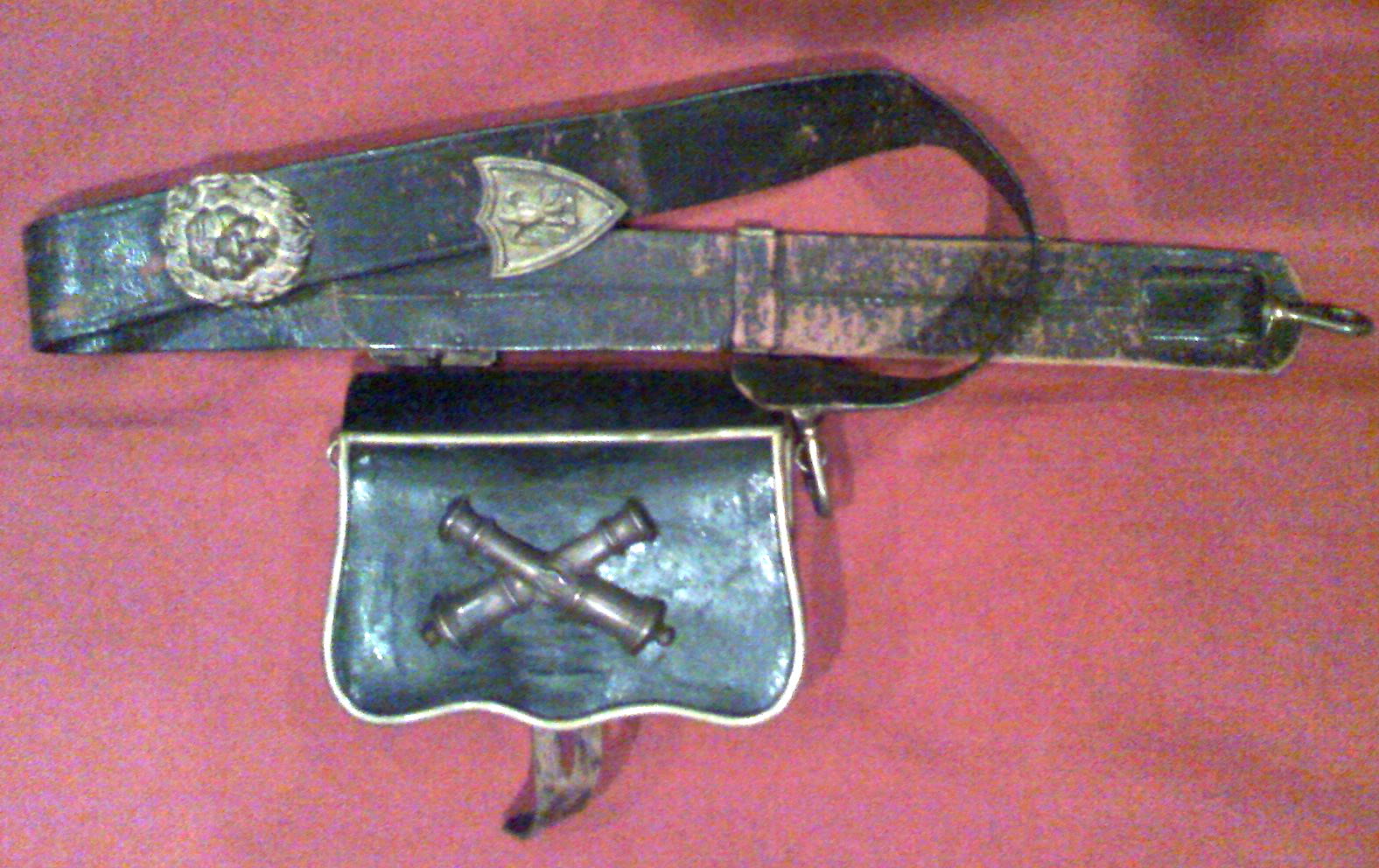
Washington Artillery shoulder belt plate-
circa 1840-50s or 1880s?
(This buckle belonged to Commander B. F. Eshleman)
Militia shoulder belt plates date from the
1830s-1880s. These embellished shoulder belt plates were used for both unit
identification and ornamentation. The proliferation of state militias in the
1840s and 1850s sparked the proliferation of inexpensive plates with
interchangeable identification motifs. Similar plates, in both look and
construction to the above Washington Artillery plate, date this style plate to
the 1840s. The Boston Light Infantry as well as the New York Light Guard of the
1840s had similar tiger motifs, all with clipped cornered rolled brass plates
with a brass tiger head attached by wires cinched through the plate and with a
soldered brass attachment pin. Antebellum examples were often silver-plated.
This style shoulder plate had a resurgence in the 1880s along with the Baldric
device and staff officer's dress cartridge box as seen in the 1880s photo of
William Miller Owen below. To date, there is yet no document or picture to
confirm whether this plate is of the 1850 or 1880 era. Considering that this WA
plate is nickel-plated and not silver-plated, the 1880 era is probably
correct for this particular plate, unless it was nickel-plated at a later date. Only
four are known to exist.

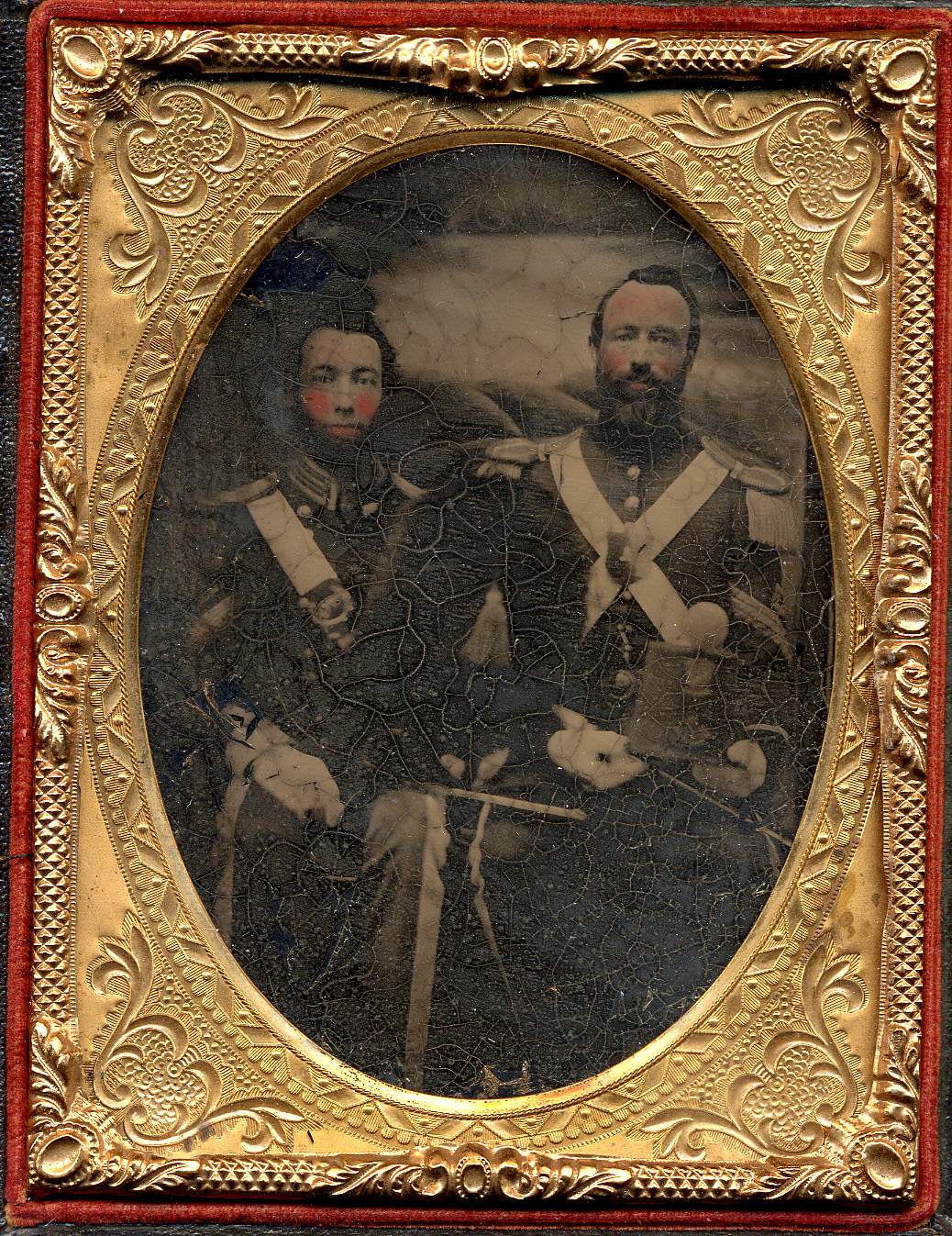
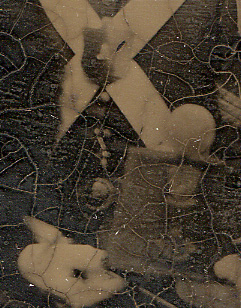
Ambrotype of artillerymen with shoulder belt
plates and shako-circa late 1850s

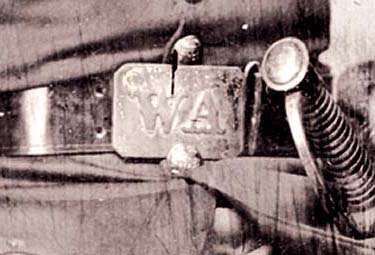
Close-up view of artillery shoulder belt
plate and shako.
This is where the WA tiger plate would
have been attached.
(Note the US Model 1851 artillery shako in
hand.)
Washington Artillery Badges
Civil War Era

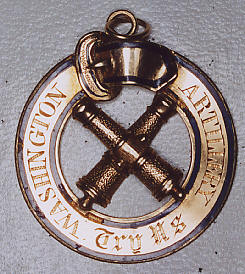
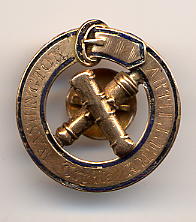
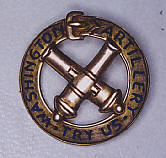
The Washington Artillery badge was designed
by James B. Walton in the late 1850s. It is composed of 14 karat yellow or rose
gold. The badge was constructed of 1-2mm plate gold with applied pieces, not
poured into a mold. Its design is that of a circular artillery belt with an
applied clasp and belt end on the badge's 12 o'clock position and upon the belt
is engraved "WASHINGTON/ Try Us/ ARTILLERY", within which is centered two
applied crossed cannons. In some examples, a tiger's head hangs from its 6
o'clock position. The back of the badge has a clasp and upper and lower
circular loops, the lower loop from which hangs a tiger's head and the upper
used to clasp a pocket watch chain. These circular loops could also be used to
sew the badge to a uniform to prevent its loss in case the clasp failed.


Although there has been speculation that the
war time badges were made by the firm of Thomas, Griswold & Co. of New Orleans, this
researcher has yet to find that documentation or seen a badge marked with any
jeweler or store's name. Close inspection of ten such
examples of the badge reveal that each is unique, as would be expected since
each was made by hand by a jeweler. No two are exactly alike but the Civil War
era models appear to fall into four designs. These slight variations suggest that
either they were made by several different jewelers or that they were made a
different times, spanning years with improvements and/or variations.
Each artilleryman was responsible for the
purchase of his own badge. Therefore, the battalion did not have documentation
as to their purchases. Hopefully, a bill of sale will emerge on one of these
rare gems.

The Daily Picayune, a New
Orleans newspaper,
published this notice on November 14, 1861,
placed by a
Washington artillerist who lost his badge
and asks for its return.
Design One
Washington Artillery badge- design one- (28mm
diameter) is the most common examined.
It has stippled crossed cannons, dark blue or black
enamel painted trim and smooth edges on the belt. The cannon were cast
individually and specimens show variations in the degree of crossing. The tiger head has large,
staring eyes.
.jpg)

(This example is missing the rear
clasp device.)
Design Two
Washington Artillery badge- design two- (29
mm diameter) has smooth cannon, light blue enamel painted trim, serrated edges
on the belt. The tiger head is a different shape than model one with smaller
eyes and larger ears.
.jpg)

.jpg)
Design Three
Washington Artillery badge- design three- is
slightly larger (30 mm diameter) and has even smoother cannon with less detail,
black enamel painted trim, smooth edges on the belt and a convex shape to the
entire piece. The tiger head is yet another variation. This example has a post
war repair, having "14K" (14 Carat) stamped on the replaced gold clasp- an
obvious different gold content than the rest of the pin.


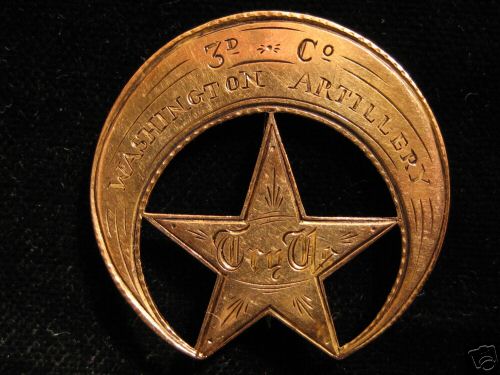
Design Four
Although this example is listed as a fourth
design variation, it probably represents a unique badge. There is only one known example and no known
photographs of any Washington artillerists wearing this style badge. The badge
reads "3rd Co./ WASHINGTON ARTILLERY/ Try Us." It was found in New Orleans with
a locket containing the image of M. "Buck" Miller , Captain of the Third
Company. Although this association would tend one to believe it belonged to
Miller, there is no engraving of his name on its reverse which opens the
possibility that another or other members of the Third Company used this style
badge.

Unique Washington Artillery badge of Third
Company- circa 1860
(only known example & believed to belong to Captain M.
B. Miller of Third Company)
The badge's design is a crescent moon upon
which is engraved "3rd Co/ WASHINGTON ARTILLERY" surrounding a star upon which
is engraved "Try Us".
Washington Artillery Badges
Post Civil War Era
Spanish American War Era


A variation of the above Civil War
time pins was used at the turn of the century when Allison Owen reorganized the
unit. These larger (30 mm) badges have the same Civil War era design but use slightly smaller,
fatter crossed cannon and wider belts and are marked on their reverses "ABG & CO/
N.O. /14K" for A.B. Griswold & Co. New Orleans , a retail store which did not come into business until 1866 and closed in
1920. This badge, circa 1909, belonged to Captain Schaumburg McGehee of Battery
B.
Washington Artillery Badge
Post Spanish American War Era
Washington Artillery small (possibly label pin) badge- circa 1920-40s?

Washington Artillery Buckles
Antebellum Era


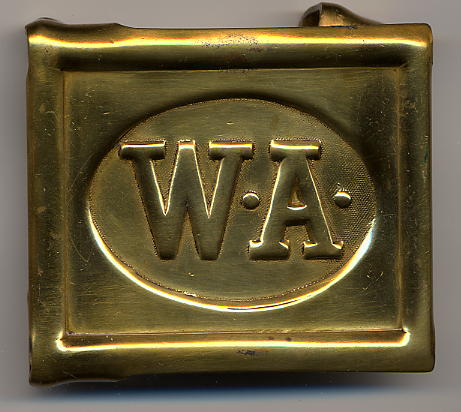
Washington Artillery belt buckle- circa
1850s
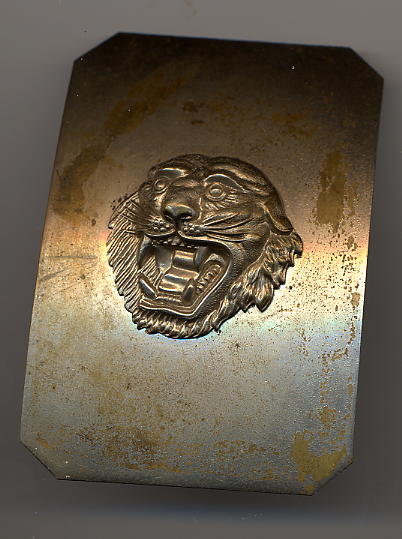
clipped rectangular belt buckle as
seen in above photo
believed to be that of the Washington
Artillery,
dug at Corinth, Mississippi- "W" missing-
This is the only example known to exist.
The Zouave-style "A" is soldered on the
plate, not wire-cinched.
The 5th Company of the Washington Artillery
was engaged at Farmington, Mississippi (about 4 1/2 miles northeast of Corinth)
on May 8-9, 1862 and participated in the evacuation of Corinth May 29-30 1862,
covering the rear of the retreat and engaging with Colonel Philip H. Sheridan's
cavalry regiment. Details of the activity of the battery have been lost.
Civil War Era

Washington Artillery belt buckle- circa
1860s
(Louisiana buckle made by Thomas, Griswold
of New Orleans,
documented to have been used by the unit,
including William Miller Owen)
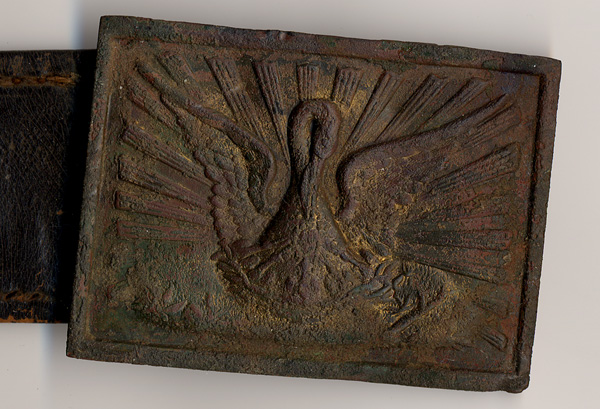
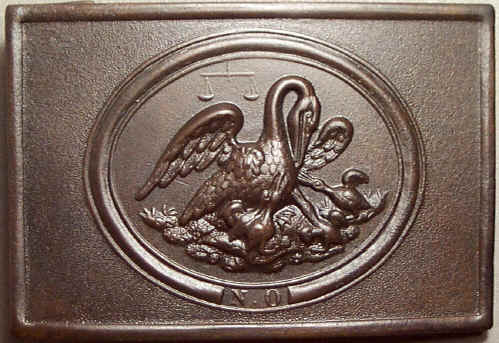
Washington Artillery belt buckle- circa
1860s
(Louisiana "Pelican with Rays" buckle,
documented to have been used by the unit,
including Lieutenant Edward Owen)
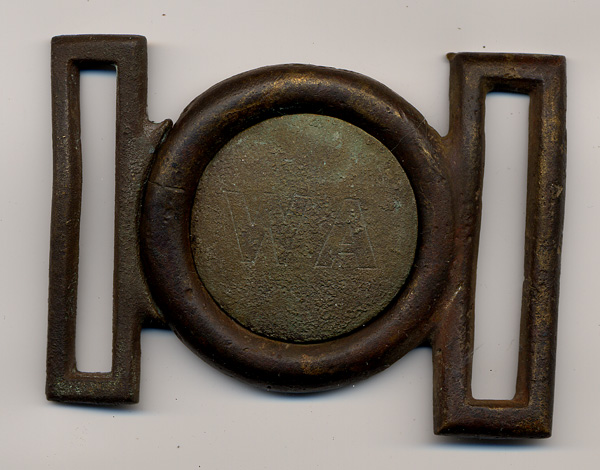
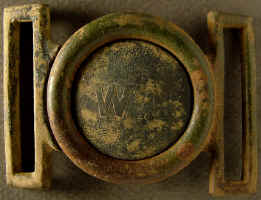
Washington Artillery two piece sword belt buckle-
circa 1860s
(etched "WA" & made from US model 1838 sword
belt buckle)
Post Civil War Era
Washington Artillery belt plate- Mills
style- circa 1880s

Washington Artillery dress belt plate- militia
style- circa 1880s


This dress belt plate is a typical clipped militia buckle with
engraved
"WASHINGTON" over an applied battery designation (in this case
"C" for Battery C) over "ARTILLERY".
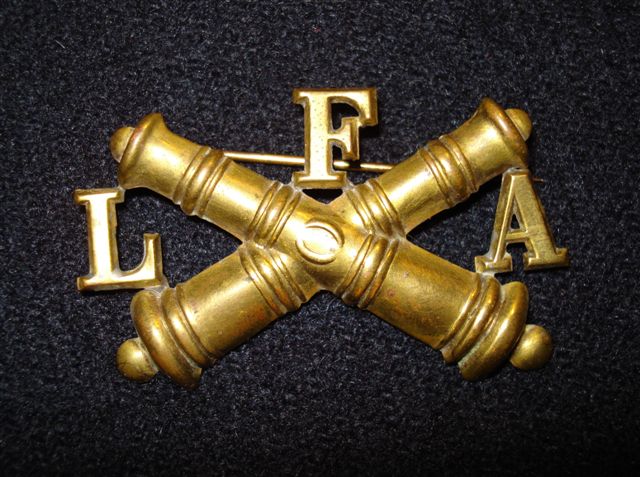
Washington Artillery buckle insignia-
Louisiana Field Artillery-circa
1880-90s


This dress belt plate is of typical 1880-90s design with
applied script "LFA."
Washington Artillery Kepi Insignia
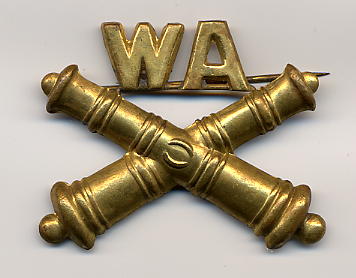
Washington Artillery kepi insignia- circa
1860s
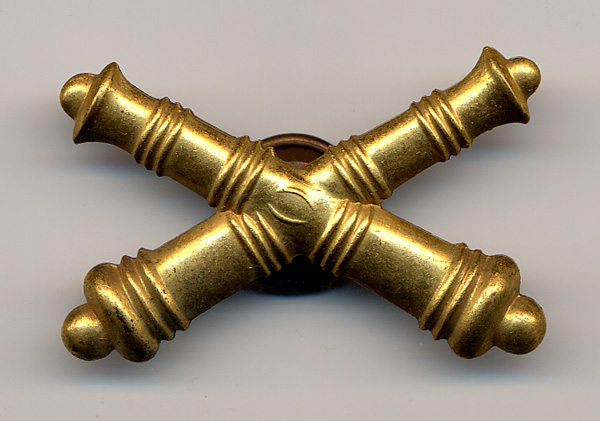
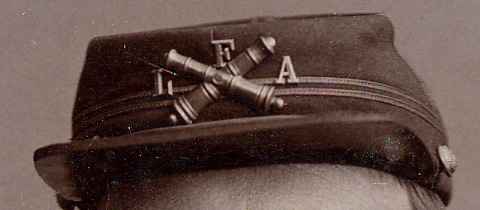
Civil War era kepi insignia consisted of brass crossed cannon & individual
plain cut or "Zouave"-style stamped brass letters for enlisted men and
officers and sometimes a stamped pelican replacing the crossed cannon for staff
officers.

Washington Artillery kepi insignia- circa
1870s

Post Civil War era kepi insignia consisted of brass crossed cannon
or nothing.
Washington Artillery kepi insignia- circa
1870-80s

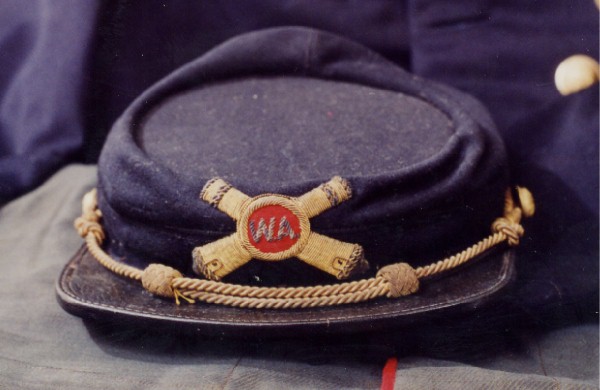
The crossed cannon were embroidered with
"WA" within a central red circle overlying the cannon.
Washington Artillery kepi insignia- Span Am era-circa
1880s

.jpg)

Washington Artillery kepi insignia-
Louisiana Field Artillery-circa
1880-90s


(LFA insignia courtesy John M. Fleming Collection)
The Louisiana Field Artillery
of the 1880s used individual brass letters around crossed cannons
When the Washington Artillery became part of
a volunteer artillery group for service in the
Spanish American War called the Louisiana
(Volunteer) Field Artillery-circa 1890s-
the "LFA"
letters were soldered to the cross cannon
Washington Artillery Dress Shako Insignia
Model One
The Washington Artillery returned to the use
of shakos as part of its dress uniform in the 1870s when it reorganized. The shako plate
used was of standard Northern manufacture. The WA used the same shakos
manufactured for the New York National Guard, replacing the stamped brass regimental numbers with
the letters "WA" and changing the New York state side buttons with
that of Louisiana. The plate has a black center medallion upon which are the
brass letters "WA," surrounded by alternating cannon barrels and spikes with a
spread eagle at its 12 o'clock position.
The firm of Baker & McKenney of New York
manufactured & sold the shakos.


Washington Artillery shako circa 1870s
This example belonged to Joseph H. Duggan of
the Washington Artillery.
Model Two
The shako insignia of this type consisted of
simple stamped crossed cannon over which is the letters "WA".
The shako was also
of Northern manufacture.


Washington Artillery kepi insignia-
M1872 pattern-circa
1870s
Model Three
Officers Model
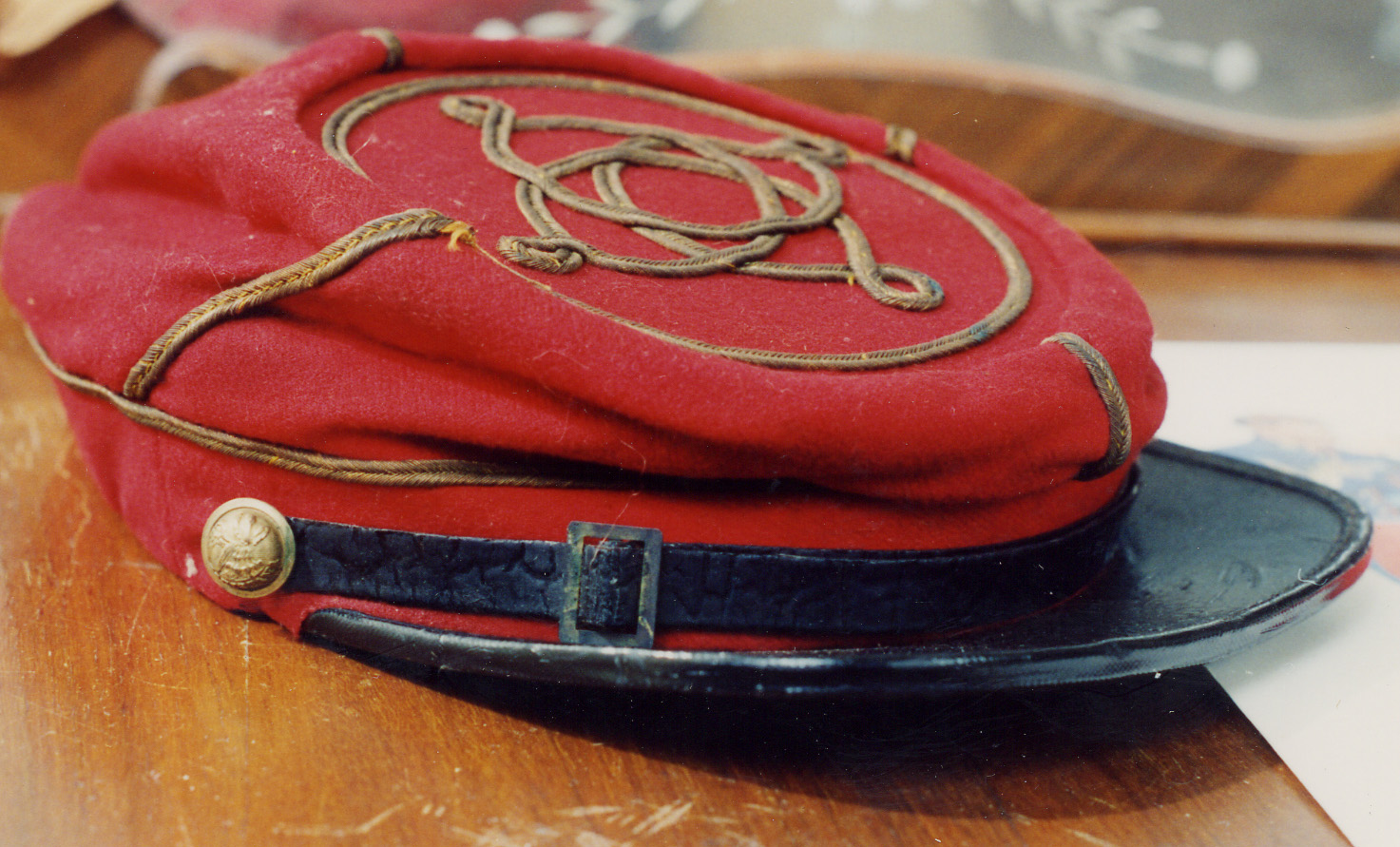
The shako insignia of this type consisted of
an elaborate shako plate of the battalion's logo with a surrounding laurel
wreath.
It was most probably used by staff officers.


(Reconstructed shako with original shako
plate.)
Washington Artillery Dress Baldric
Insignia

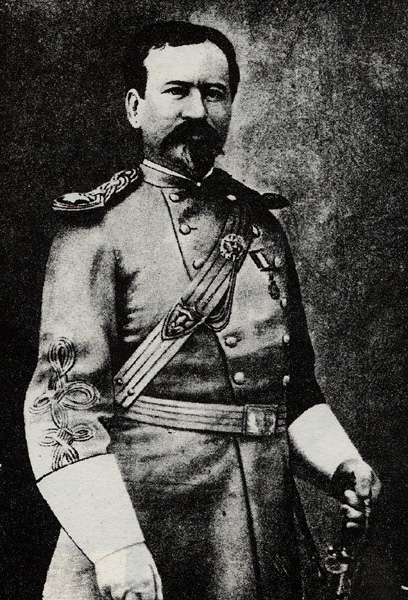
1880s-era photo of William Miller Owen
showing a shoulder plate Baldric device (a wide sash worn over the shoulder), a
French design.
On the front of the shoulder sash, a die
struck eagle within a shield is attached by chains to a brass lion's head.
circa 1876-1885


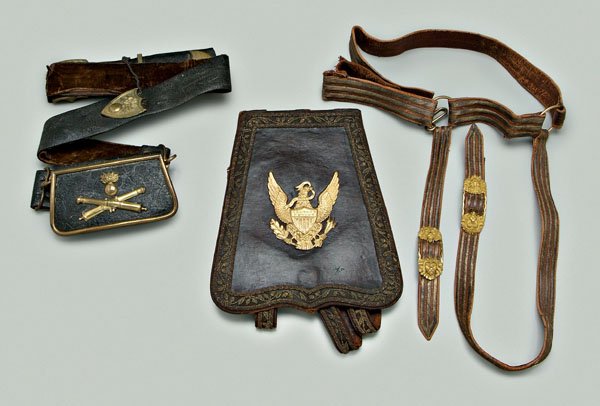
Artillery Baldric staff officer's dress
accoutrements- circa 1855-1885
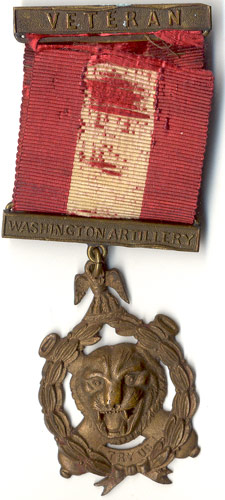
Washington Artillery Veteran Badges
Washington Artillery veteran's badge- circa
1870-80s
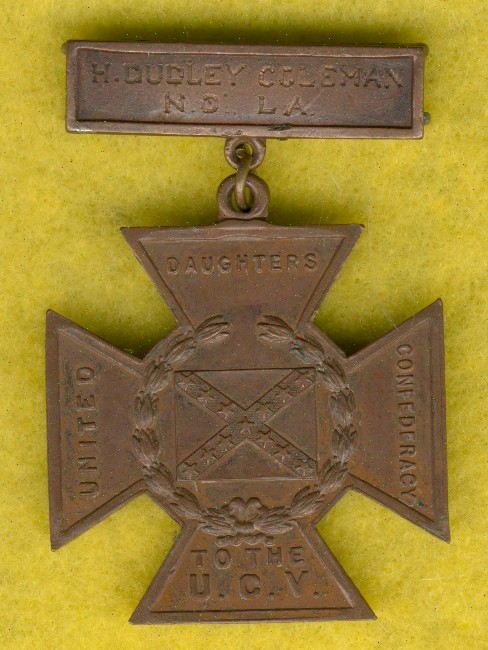
United Confederate Veteran's badge

This badge belonged to Washington Artillerist
H. Dudley Coleman
presented by the United Daughters of the
Confederacy
circa 1900-1913
Washington Artillery veteran's badge- World
War I

Washington Artillery Insignia of the 20th
Century

Washington Artillery officer's insignia World War I-
circa 1901-1917
(Unit designation changed to 141st Field
Artillery on September 27, 1917.)
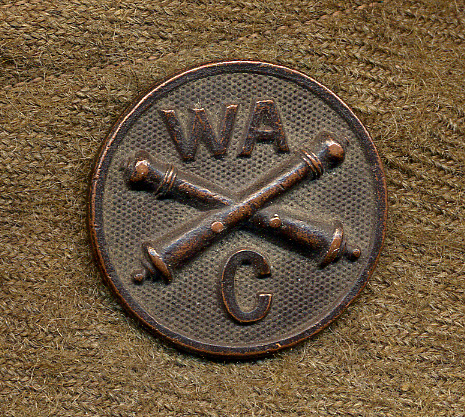
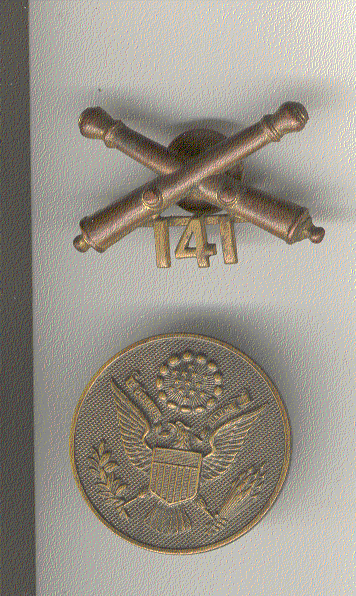
Washington Artillery collar insignia,
Battery C, World War I-circa 1912

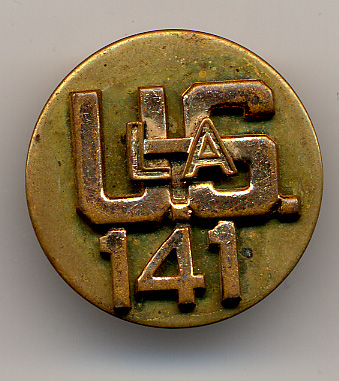
Washington Artillery collar insignia,
LA on US over 141-issued in 1918-23

Washington Artillery commander's badge-
Allison Owen
circa 1902

Washington Artillery officer's hat pin insignia World War I/II

Washington Artillery/141st collar insignia,
pre-World War II
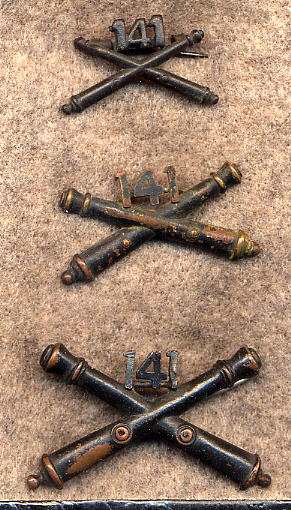
Washington Artillery/141st collar & hat insignia,
pre World War II

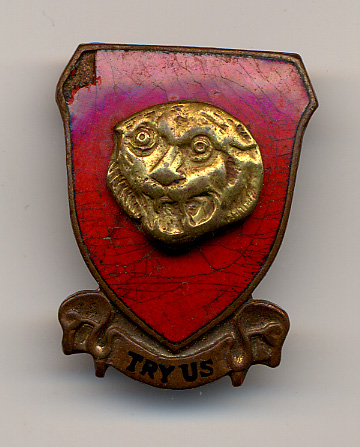
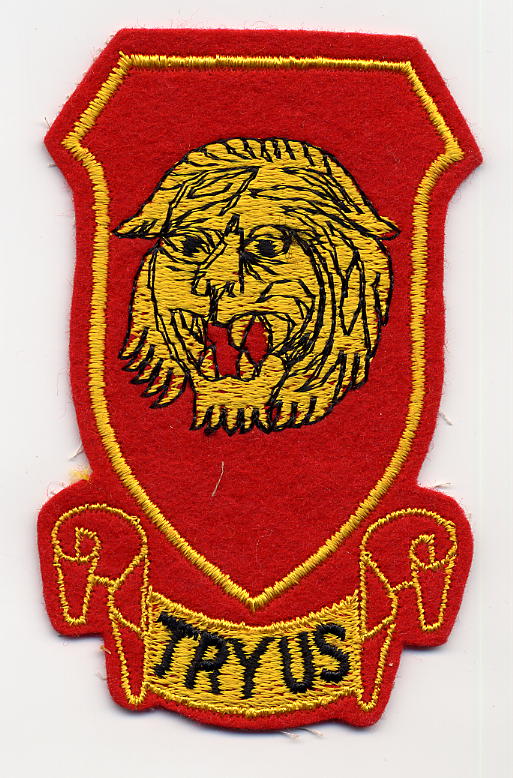
Washington Artillery insignia, 141st FA, World War II-
circa 1940s
(a tiger head within a red shield,
underneath the motto "Try Us")
Washington Artillery insignia, 935th FA, World War II-
circa 1940s
(a tiger head within a red shield,
underneath the motto "Continuous Fire")
(Photo courtesy John Fleming)

Washington Artillery insignia patch, World
War II- circa 1940s
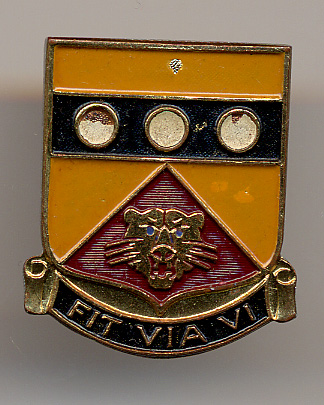
Washington Artillery insignia, World War II-
circa 1940s
773rd Tank Destroyer Battalion
(a tiger head within a shield with motto
"Fit Via Vi', Latin for "The way is forged by labor/strength")
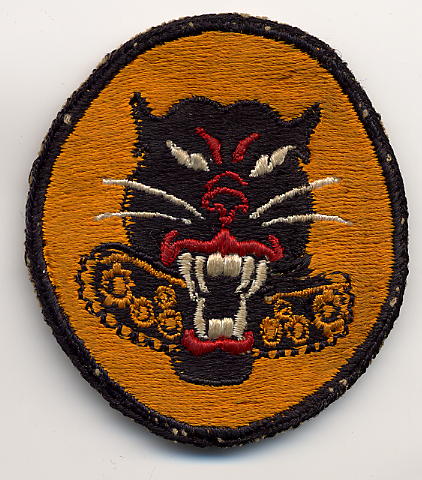
Washington Artillery insignia patch, World
War II- circa 1940s
773rd Tank Destroyer Battalion
Batteries G & H of the
Washington Artillery were assigned to a new anti-tank category and were
later re-designated as Batteries A & B of the newly created 773rd
Tank Destroyer Battalion. No Tank Destroyer unit in Europe had a better combat
record than the 773rd. Under the aggressive leadership of Colonel
Frank G. Spiess, it destroyed 113 tanks, 25 SP guns, and 105 pill boxes. It
fired 8,219 rounds in direct fire, took 1,970 prisoners, and spent 254 days in
combat
- a truly remarkable record. For
this meritorious action, the battalion was awarded the Presidential Unit
Citation.
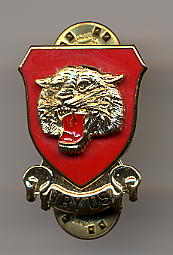
Washington Artillery insignia - present day
HOME